Manufacturing website design: what a B2B site needs to sell abroad
Manufacturing website design for B2B: product pages built around how buyers search, real language versions for export and a CMS your team can update.
· 3 min read
Good manufacturing website design starts from how buyers search: by application, part code and compatibility, not by your internal product families. A manufacturer’s website has to answer technical questions quickly, work in every export language and be easy for the marketing team to keep up to date.
Many industrial websites are still digital brochures: company history, a product list and a contact form. Buyers now do much of their research before they talk to anyone, often with AI assistants, so the site has to do part of the sales work. I covered the search side in SEO for manufacturers; here I focus on the website itself.
What should a manufacturing website include?
- Product pages organised the way customers search: by code, compatibility and application, with filters that match the questions buyers really ask.
- Technical data as text, not only in PDFs: the key specifications on the page, with the full data sheet as a download.
- Proof: certifications, standards and application cases with real numbers.
- A clear route to sales: quote requests, distributors by country and a contact that reaches the right person.
- Speed on any device: technical buyers also check your site on a phone, at a trade show or in the workshop.
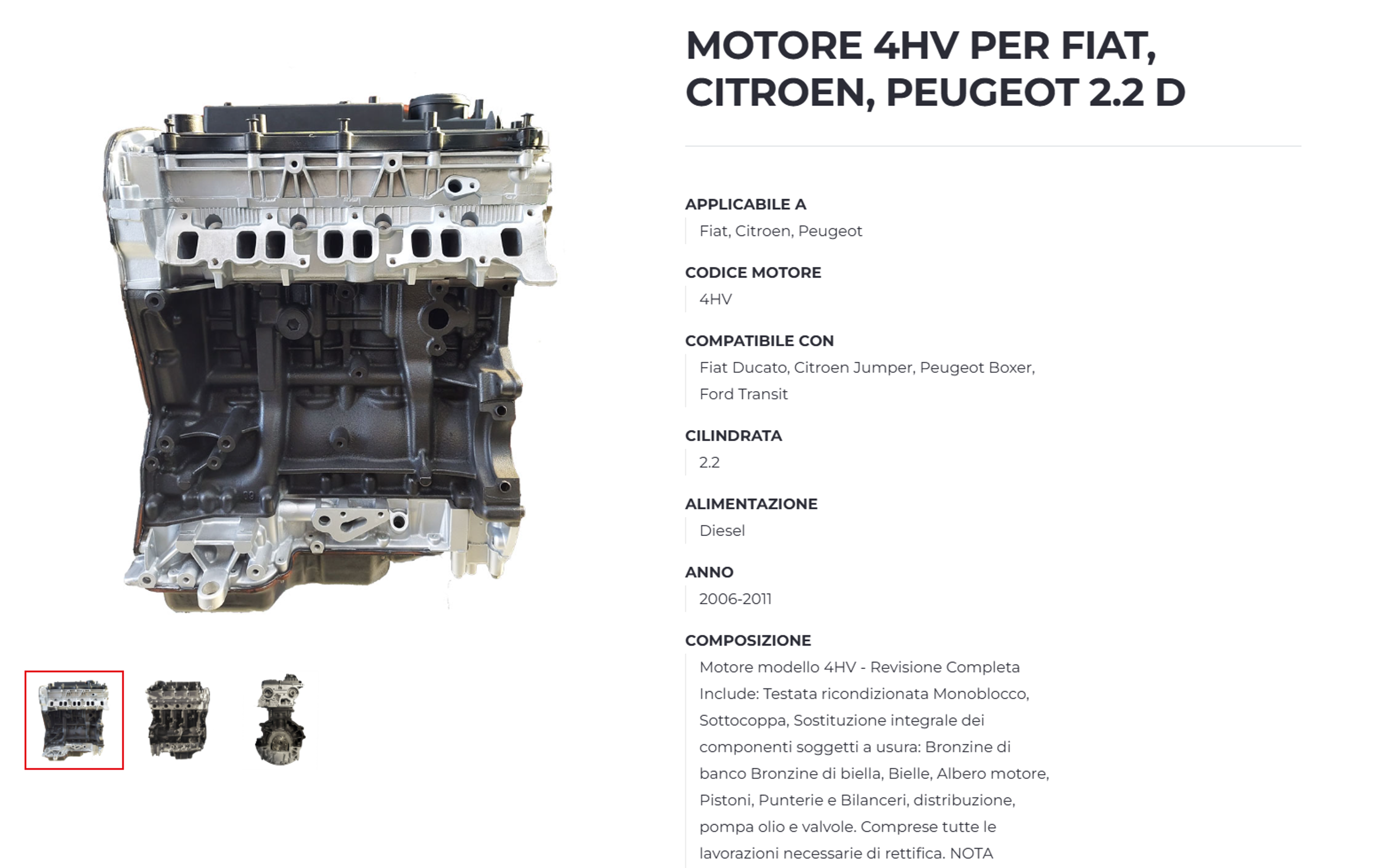
For Turbomotori, which remanufactures engines and turbochargers, product pages were reorganised around engine code and compatibility, with new product photos and technical SEO. With the new multilingual store, revenue grew 25% in one year.
Multilingual website: one URL for every language
Export markets need real language versions, not a translate button. Google recommends a different URL for each language rather than switching content with cookies or browser settings, and hreflang annotations to tell it which pages are versions of the same content.
Translation is where AI saves the most time, as long as a person checks it. For Cavagna Group I produced 70 catalogues and brochures in 6 languages for a group selling in more than 150 countries. Today I would start from a single library of data sheets, generate each language with AI and have native speakers review it, so the website and the catalogues always say the same thing.
Industrial website design with a headless CMS
A headless CMS keeps content separate from design. One product record can feed the website in every language, the catalogue and the distributor portal, and the marketing team can update it without touching code. It is not the only option: for a small site with a few pages, a well-built WordPress site can be enough.
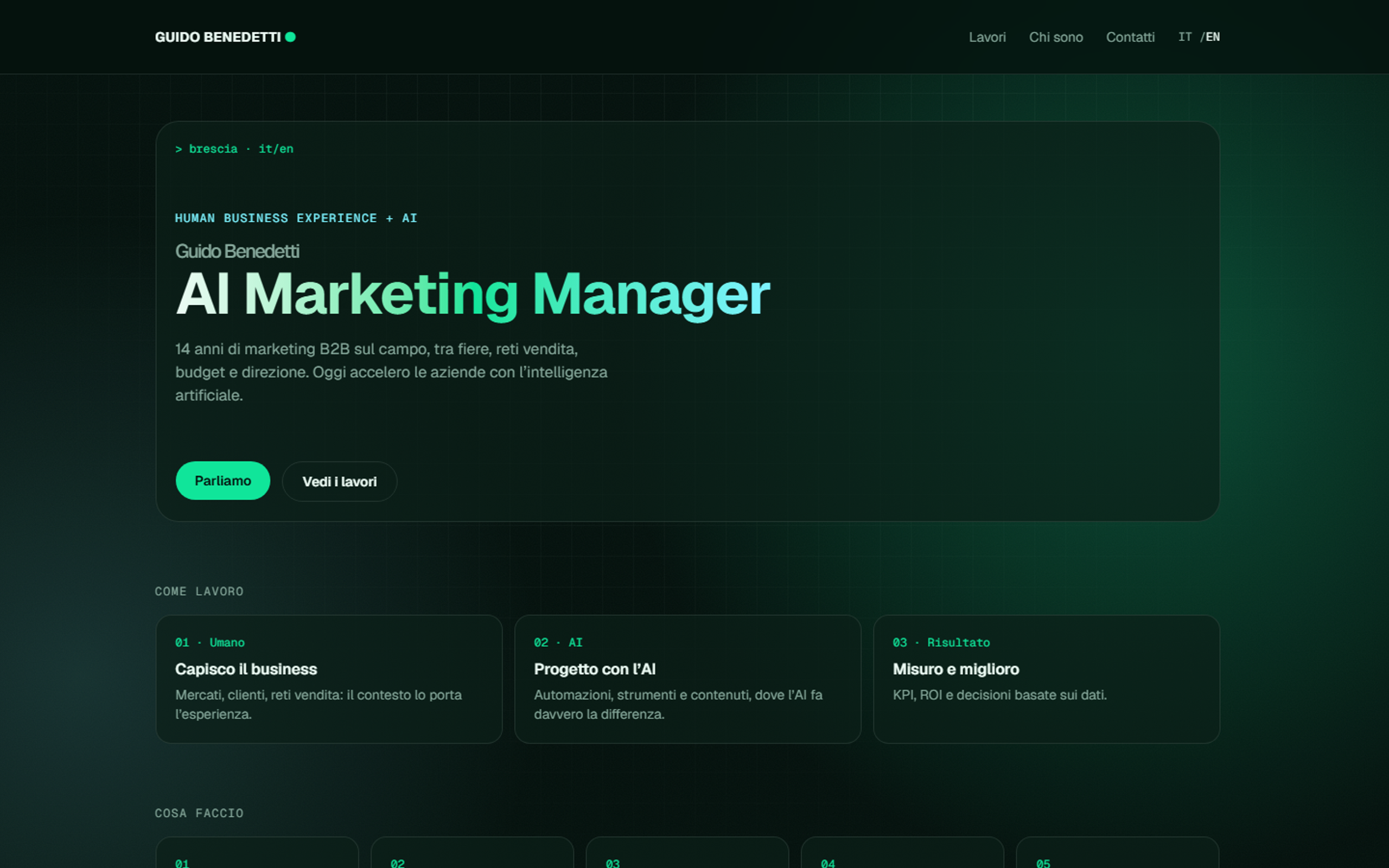
I built my own website this way, with Next.js and Sanity: Italian and English with separate URLs, structured data for search engines, 99 on Lighthouse performance and 100 on SEO. AI prepares the drafts in the CMS, I review and publish, and the site updates itself.
After 14 years in B2B marketing, including years spent on industrial websites and catalogues, my view is simple: a manufacturer’s website should work like its best salesperson, available in every language and every time zone. If you want to rethink yours, let’s talk.